Amir Hughes · 22 October 2026
Mapping Query Intent Refinements to Index Stability Patterns in Emerging Analytics Frameworks
Search systems continue to refine how they interpret user queries while maintaining consistent index structures across large datasets, and researchers track these processes through specialized analytics frameworks that emerged over the past several years. Data from multiple industry reports shows that query intent signals shift frequently due to seasonal trends, regional language variations, and updates in user behavior patterns, yet index stability remains a core requirement for reliable retrieval performance.
Core Components of Query Intent Refinement
Query intent refinement involves identifying changes in user goals behind search terms, such as moving from informational queries to transactional ones, and analytics frameworks map these changes against index metrics like crawl frequency, document freshness scores, and ranking consistency. Studies from academic institutions indicate that machine learning models now process billions of daily refinements by clustering similar intent signals, which allows systems to adjust without triggering widespread index volatility.
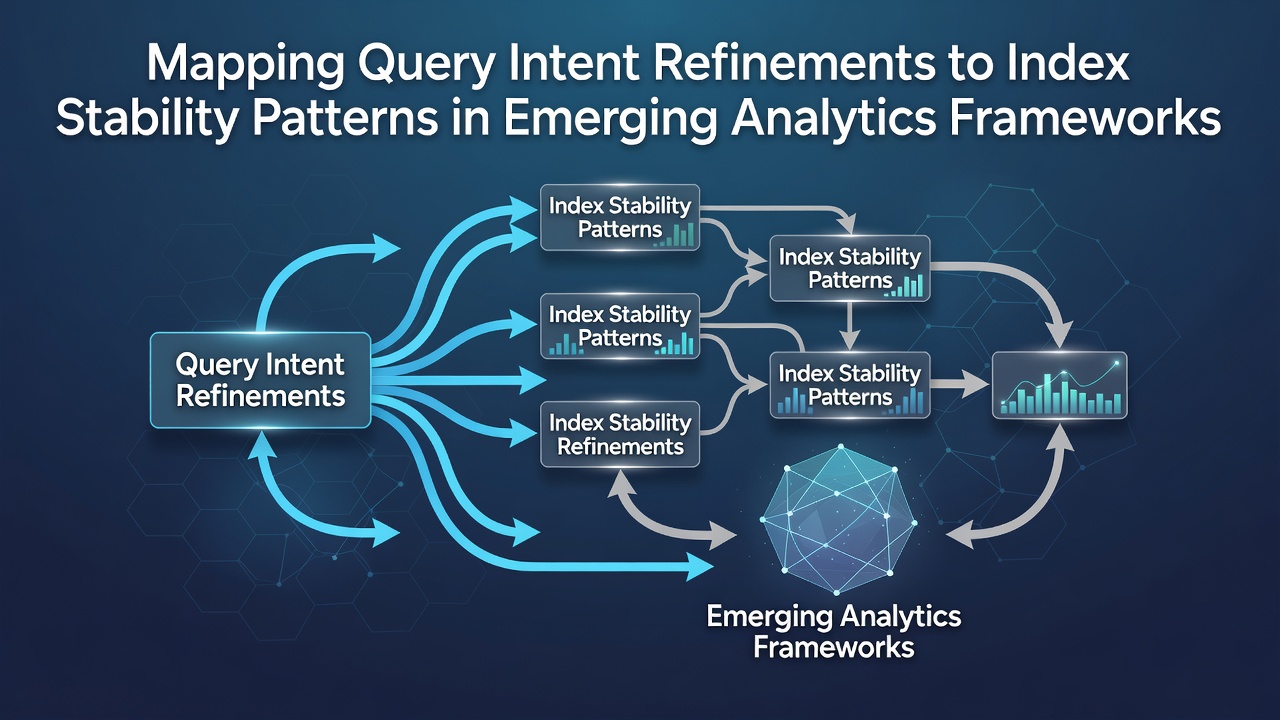
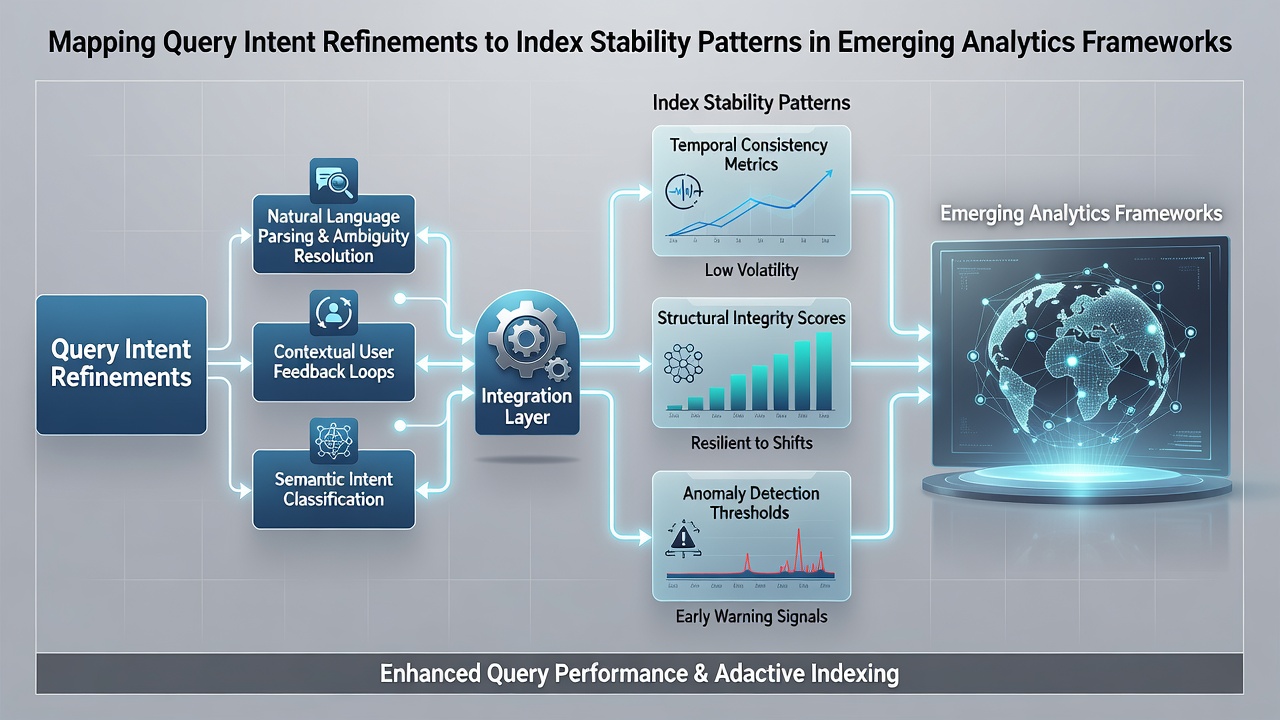
Frameworks integrate natural language processing layers with stability monitoring tools, and this combination reveals patterns where refined intents correlate with specific index segments that require targeted re-crawling rather than full rebuilds. Observers note that such targeted approaches reduce computational overhead while preserving retrieval accuracy across diverse content types.
Index Stability Patterns and Their Measurement
Index stability patterns emerge when frameworks measure variance in document inclusion rates, link graph updates, and ranking position fluctuations over defined time windows. According to findings published by the Association for Computing Machinery, stability thresholds often align with intent refinement clusters, enabling predictive adjustments that prevent cascading errors in search results. These patterns appear most clearly in high-volume verticals such as e-commerce and news, where intent shifts occur rapidly but index integrity must hold steady.
Analytical Techniques in Emerging Frameworks
Emerging frameworks employ graph-based modeling to connect refined query intents directly to index nodes, using techniques like temporal embedding and anomaly detection to flag potential instability points. Research indicates that these models process historical query logs alongside real-time signals, creating mappings that highlight which intent refinements precede measurable drops in index consistency. Engineers apply these mappings during framework updates to prioritize stability controls in affected segments.
One study revealed that frameworks incorporating reinforcement learning loops achieve tighter alignment between intent changes and stability outcomes, because the systems learn from previous refinement cycles and adjust indexing priorities accordingly. Data shows reduced latency in response to intent shifts when such loops operate continuously.
Developments Observed in October 2026
In October 2026 several framework providers released updates that expanded mapping capabilities to include multilingual intent refinements and cross-device stability tracking. Reports from research organizations across North America and Europe documented improved precision in identifying stability risks tied to seasonal query surges, such as those occurring during global shopping events. These updates also introduced standardized APIs that allow third-party analytics tools to ingest mapping outputs without custom integration work.
Figures from government technology assessments in Australia and Canada reveal that organizations adopting the latest framework versions recorded measurable gains in index uptime during periods of high intent volatility. The refinements focused on reducing unnecessary re-indexing while responding faster to verified intent clusters.
Practical Implementations Across Sectors
Organizations in finance and healthcare sectors apply these mappings to maintain regulatory compliance, because index stability directly affects audit trails and data provenance records. Analysts combine intent refinement logs with stability dashboards to generate compliance reports that satisfy requirements from multiple jurisdictions. Case examples demonstrate that early detection of intent-driven stability issues prevents downstream retrieval failures that could otherwise surface during high-stakes queries.
Academic teams continue testing hybrid frameworks that blend traditional inverted indexes with vector-based representations, and preliminary results suggest stronger correlations between refined intents and stable index segments when both representations operate in parallel. Such testing occurs at institutions spanning several continents, producing comparable datasets that strengthen the overall mapping methodology.
Conclusion
Mapping query intent refinements to index stability patterns provides structured visibility into how search systems adapt without sacrificing core reliability. Continued evolution of analytics frameworks supports more granular control, and ongoing data collection from diverse regions strengthens the accuracy of these mappings across varied operational environments.